
Why Do Abstract Paintings Move Me So Deeply?
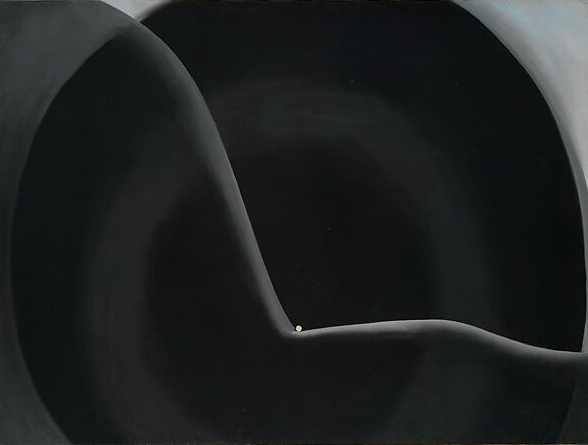
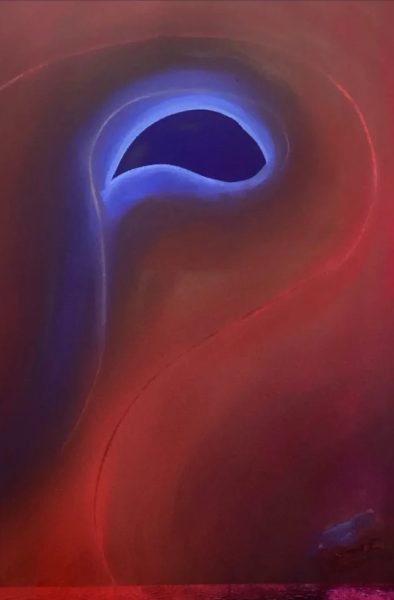
In my last blog post, I wrote about my response to my friend Alan Brain’s painting, A Curious Sadness. It’s a simple yet powerful composition—two bold shapes in electric blue and deep red, conveying a sense of emotion that I found deeply moving. I’ve noticed this isn’t an isolated experience. Certain abstract works seem to reach into me and stir something profound. Georgia O’Keeffe’s Black Abstraction reduced me to tears when I saw it in person. Rothko’s vast colour fields have an almost hypnotic effect—especially when viewed at their intended scale. So what is it about these paintings that affects me so deeply?
The Power of Colour
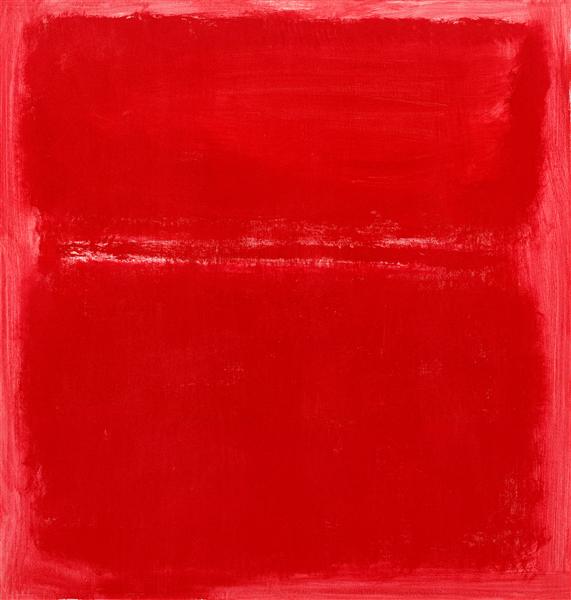
Mark Rothko believed in the raw emotional power of colour, layering hues to create luminosity and depth. His canvases aren’t just paintings; they are an experience. The same can be said for Black Abstraction, where O’Keeffe’s use of dark, almost entirely black tones creates a reaction that bypasses thought and goes straight to feeling1. Alan Brain’s painting, too, uses colour in a way that seems to speak directly to my subconscious.
Simplicity That Speaks Volumes
The abstract works I’m drawn to often share a sense of simplicity—bold forms, reduced palettes, and minimal detail. Yet within that simplicity lies something vast. Without a clear narrative or figurative elements, my mind is free to interpret, to find meaning in the movement of a line, the tilt of a shape, or the contrast between colours.
Projection and Personal Meaning
Abstract paintings are like mirrors, reflecting something personal back at the viewer. When I look at A Curious Sadness, I see curiosity and melancholy, but someone else might see something entirely different. That’s the beauty of abstraction—its meaning isn’t fixed; it shifts depending on who is looking. Perhaps that’s why certain pieces resonate so strongly—they give space for my own emotions to surface.
The Impact of Scale
There’s also something about experiencing these works in person. Rothko’s paintings, for example, lose some of their magic in print because scale is part of their effect. Standing before a towering canvas, engulfed in a field of colour, is an entirely different experience from looking at a reproduction. It’s immersive, almost meditative2.
Whatever the reason, these paintings move me in ways I can’t always explain. And maybe that’s the point. Art, at its best, doesn’t just speak—it makes us feel.
Footnote
- If I recall correctly from my visit to see the Georgia O’Keeffe painting, she devised it whilst high on lidocaine at the dentist! Maybe that’s why it is so visceral!
- I could have included any of Rothko’s colour field paintings as an example, as practically all of them have the same effect on me. I included this one because a print hangs in my house. I found a full-size canvas print of it in a junk yard and bought it for a fiver. Originally, I didn’t recognise the painting (being more familiar with his work with 2 or 3 colours). Luckily, I didn’t paint over it as planned, and it has pride of place in our house.
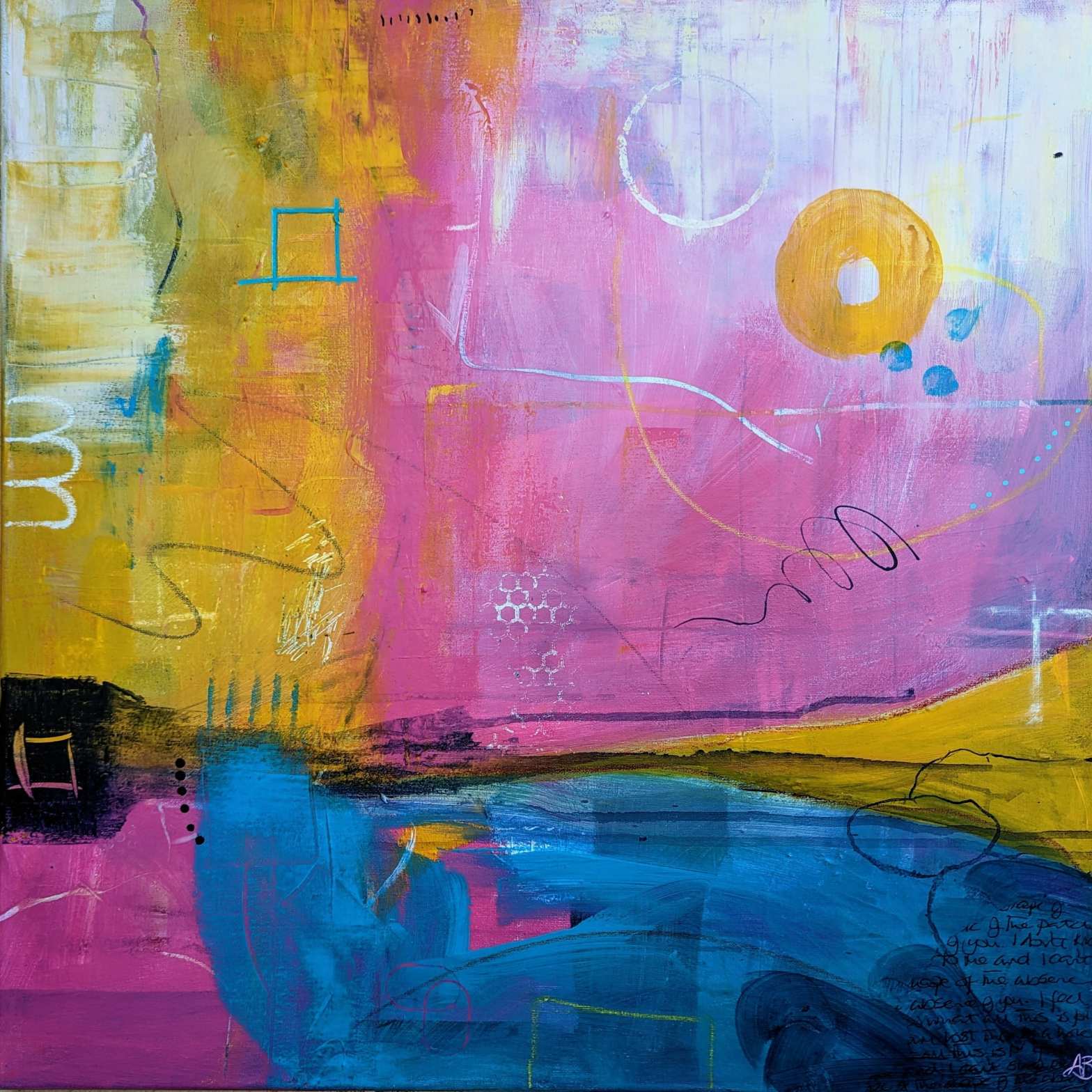
The featured image is my painting True North, 2023.

 Ailsa Brims Art
A beautifully articulated reflection on the power of abstraction, with powerful examples. True North particularly draws me in—there’s something about the way abstract art bypasses the distractions of figurative detail, allowing for a more direct emotional resonance. It feels more in tune with the non-verbal, psychological aspect of communication, evoking a response that is felt rather than deciphered. A wonderful piece.